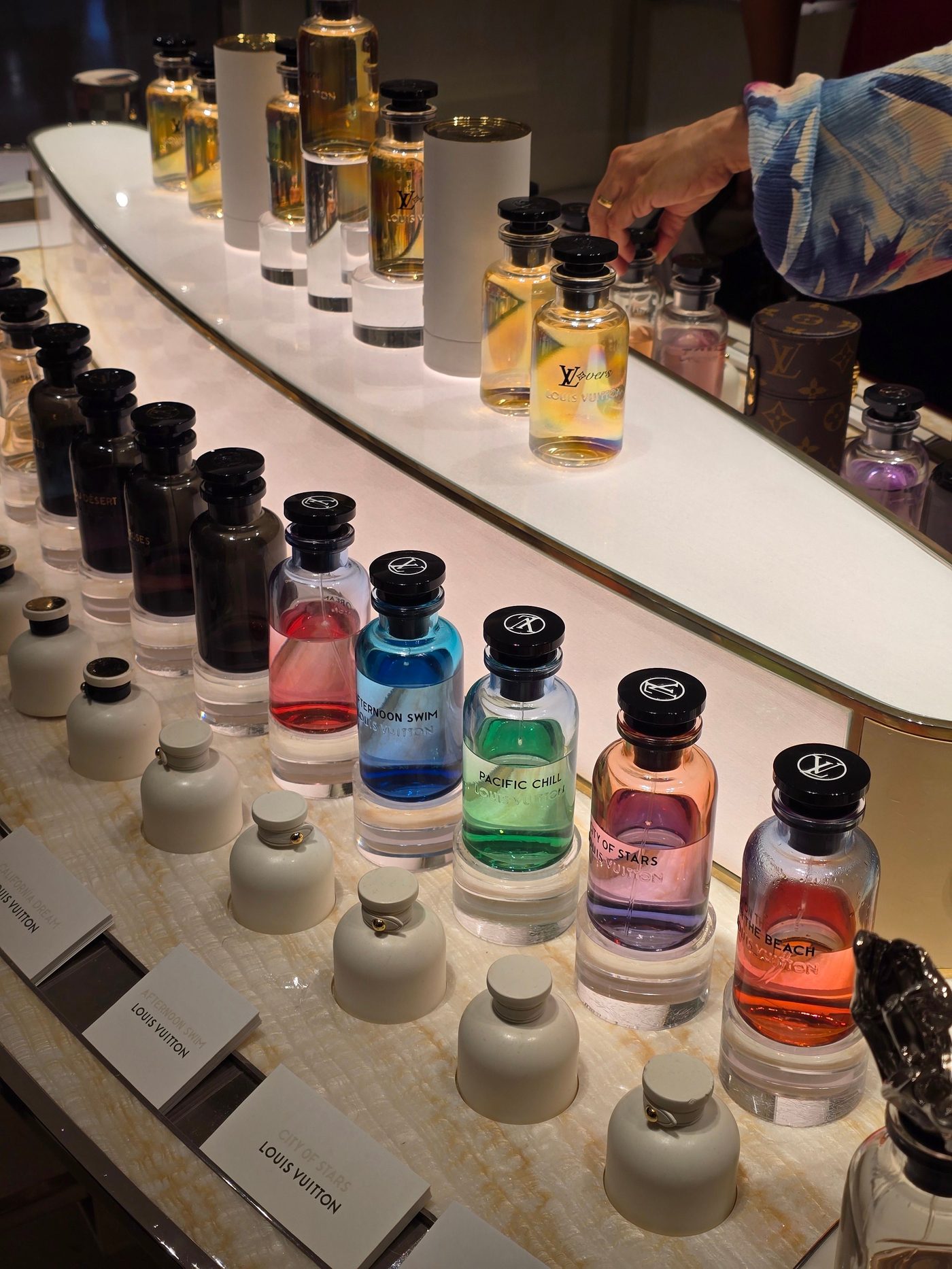
Stand before any fragrance counter and the same scent will often appear in two forms — eau de parfum and eau de toilette — at noticeably different prices. The names sound almost interchangeable, yet the distinction between them shapes how a perfume smells, how long it lasts, and how much you pay. Understanding it is one of the most useful things a fragrance buyer can learn.
It begins with concentration
The defining difference is the proportion of fragrance oil suspended in the alcohol base. Eau de parfum (EDP) carries a higher concentration, typically in the region of fifteen to twenty percent. Eau de toilette (EDT) is lighter, usually between five and fifteen percent. Every other difference — strength, longevity, price — flows from this single fact.
What it means on the skin
An eau de parfum projects more assertively and lingers longer, often carrying through a full day and into the evening. An eau de toilette is airier and closer to the skin, frequently softening within a few hours. Neither is superior in absolute terms; they are simply different intensities of the same idea.
Curiously, the same fragrance can smell subtly different across the two concentrations. A higher oil load can bring base notes forward, while a lighter version may emphasise the brighter top notes. It is worth testing both before deciding which interpretation you prefer.
Which to choose
Reach for eau de parfum when you want presence and longevity — for evenings, for cooler weather, or simply when you would rather not reapply. Reach for eau de toilette when you want something lighter and more discreet — for warm days, for the office, or as a more affordable way to explore a scent before committing to its fullest form.
For a deeper understanding of how a fragrance unfolds regardless of its concentration, see our guide to the fragrance families, and our framework for choosing a perfume that suits you.
The rest of the spectrum
Beyond these two, you will encounter parfum (or extrait) — the most concentrated and enduring, and the most expensive — and eau de cologne, the lightest and most fleeting of all. For the vast majority of choices, however, the decision that genuinely matters is the one between eau de parfum and eau de toilette.